
Choosing the best time to visit Gettysburg can greatly enhance your experience. Weather, crowd levels, seasonal events, and travel costs all play an important role in planning the perfect trip. Whether you’re interested in history tours, photography, or peaceful exploration, Gettysburg offers something special in every season.
Seasonal Overview of Gettysburg
Gettysburg experiences four distinct seasons, each offering a unique atmosphere. Spring and fall provide mild temperatures and scenic beauty, summer brings major historical events and high visitor numbers, while winter offers quiet reflection and fewer crowds. Understanding these seasonal differences helps travelers plan more effectively.
Spring Weather & Tourism
Spring (March–May) is one of the most popular times to visit Gettysburg. Temperatures are comfortable, landscapes bloom with greenery, and tourism begins to increase.
Pros:
- Pleasant weather for walking tours
- Fewer crowds than summer
- Lower hotel prices compared to peak season
Cons:
- Occasional rain
- Some early-season events may be weather-dependent
Summer Crowds & Heat Tips
Summer (June–August) is Gettysburg’s busiest season, especially around early July during the battle anniversary.
What to Expect:
- Large crowds and higher hotel prices
- Hot and humid weather
- Extended park hours and numerous events
Heat Tips:
- Visit early in the morning or late afternoon
- Stay hydrated and wear light clothing
- Use shaded paths and indoor attractions
Fall Foliage & Events
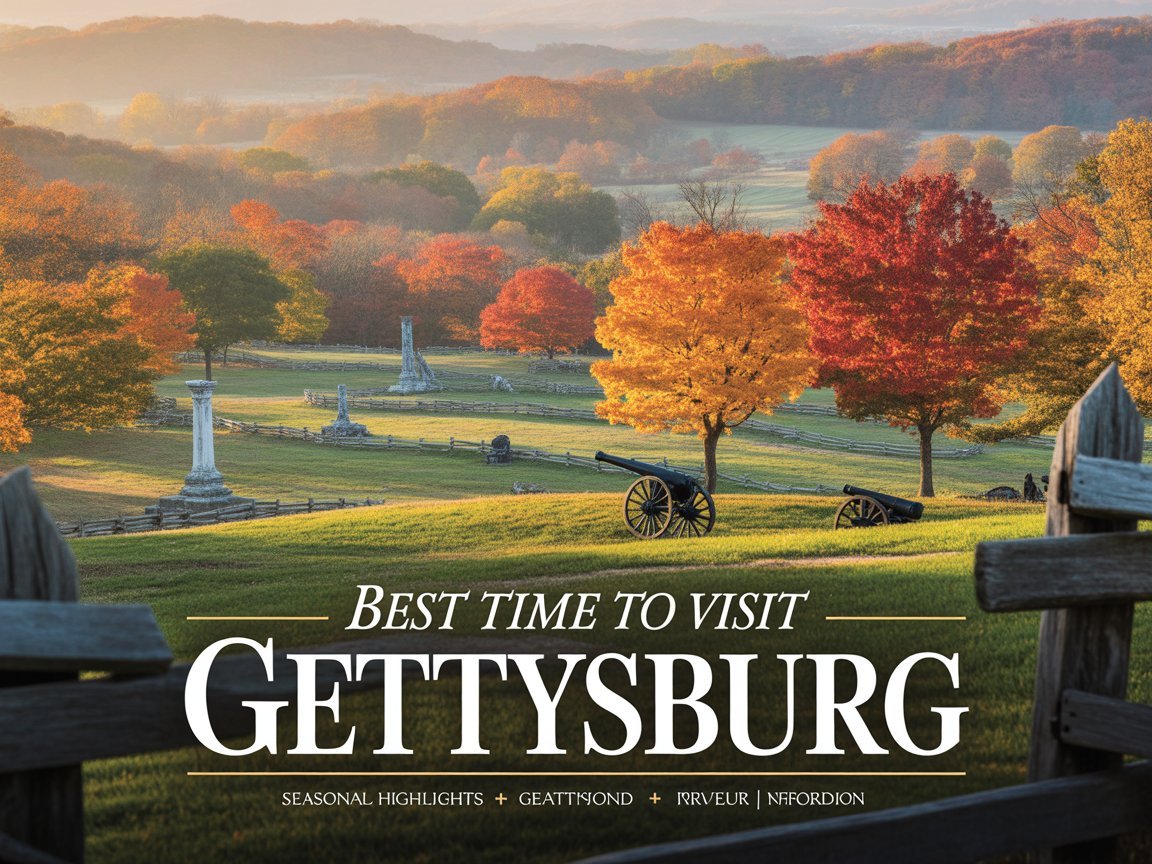
Fall (September–November) is considered by many to be the best time to visit Gettysburg. Cooler temperatures, colorful foliage, and a calmer atmosphere create ideal conditions.
Highlights:
- Stunning autumn scenery
- History-focused events and lectures
- Comfortable weather for outdoor exploration
Fall is especially popular with photographers and history enthusiasts.
Winter Visits: Pros & Cons
Winter (December–February) offers a quieter and more reflective experience.
Pros:
- Very few crowds
- Lower hotel rates
- Snow-covered landscapes add historical atmosphere
Cons:
- Cold temperatures
- Limited outdoor programs
- Shorter daylight hours
Winter is best for visitors seeking solitude and budget-friendly travel.
Best Months for History Tours
The best months for history tours are April, May, September, and October. These months offer comfortable weather, knowledgeable guides, and fewer distractions from peak-season crowds. Ranger-led programs and guided battlefield tours are widely available during these periods.
Hotel Pricing by Season
Hotel prices in Gettysburg vary significantly by season:
- Spring: Moderate pricing
- Summer: Highest rates, especially in July
- Fall: Moderate to high, depending on events
- Winter: Lowest prices
Booking early is recommended for peak seasons and special event weekends.
Photography Timing & Lighting
For photography, the best lighting occurs:
- Early morning for soft light and misty landscapes
- Late afternoon and golden hour for warm tones
Fall provides dramatic colors, while winter snow offers striking contrast. Summer mornings are ideal to avoid harsh midday light.
Avoiding Peak Crowds
To avoid large crowds:
- Visit on weekdays
- Explore lesser-known battlefield areas
- Start your day early
- Avoid major holidays and early July if possible
Off-season and shoulder-season travel provide a more relaxed experience.
Travel Planning Tips
- Check event calendars before booking
- Reserve hotels and tours in advance
- Wear comfortable walking shoes
- Allow time for both guided and self-guided exploration
- Monitor weather forecasts
Final Thoughts
The best time to visit Gettysburg depends on your priorities. Spring and fall offer the perfect balance of weather and crowd levels, summer delivers major historical events, and winter provides quiet reflection and budget-friendly travel. With proper planning, any season can offer a meaningful and memorable visit to Gettysburg.
