
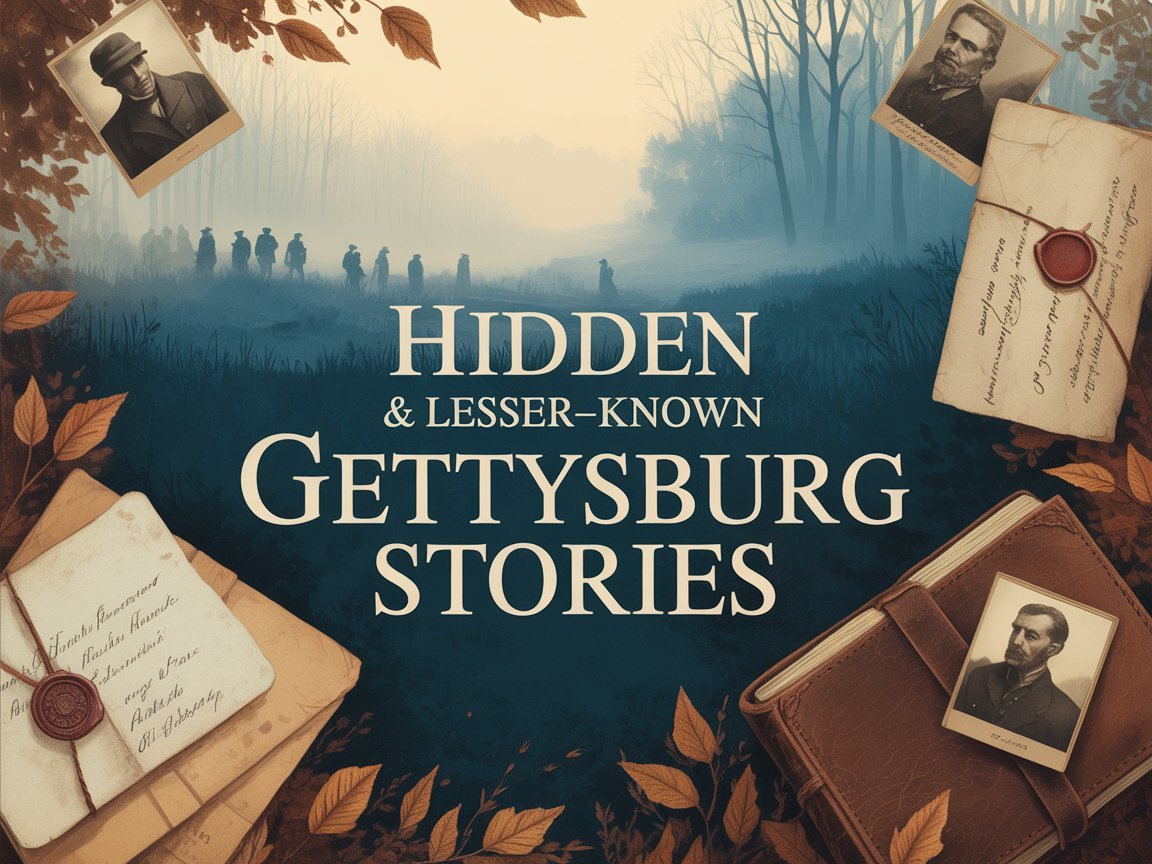
While Gettysburg is best known for its massive armies and famous generals, many of the battle’s most powerful stories remain hidden beneath the surface. Beyond the well-known monuments and battle lines are deeply human experiences—forgotten soldiers, frightened civilians, and quiet acts of bravery that shaped the outcome and legacy of the battle.
Forgotten Soldiers of Gettysburg
Thousands of soldiers who fought at Gettysburg left behind little or no historical record. Many were young farm boys, immigrants, or recently enlisted volunteers whose names never appeared in history books. Some units suffered devastating losses, leaving no one behind to tell their stories. These forgotten soldiers remind us that Gettysburg was not just a clash of armies, but a tragedy experienced by individuals whose sacrifices often went unrecognized.
Civilian Life During the Battle
Gettysburg was a small town of about 2,400 residents when the battle erupted around them. Civilians found themselves trapped between opposing armies, hiding in cellars while artillery shells destroyed homes and farms. Families shared food and shelter with wounded soldiers, regardless of which side they fought for. Daily life vanished overnight, replaced by fear, uncertainty, and survival.
Stories of Local Women & Children
Women and children played vital yet overlooked roles during the battle. Women acted as nurses, cooks, and caretakers for the wounded, often working around the clock with limited supplies. Children carried water, delivered messages, and helped bury the dead. Their courage under unimaginable conditions shows how the battle affected every member of the community.
Medical Tents & Field Hospitals
After the fighting ended, Gettysburg became one of the largest medical centers ever created during the war. Churches, barns, schools, and private homes were transformed into field hospitals. Surgeons worked nonstop, performing amputations and emergency procedures with little anesthesia. These grim locations reveal the brutal reality of 19th-century warfare and the suffering that continued long after the guns fell silent.
Unmarked Graves & Lost History
Despite efforts to properly bury the fallen, many soldiers were placed in unmarked or temporary graves. Confederate soldiers, in particular, were often buried where they fell. Over time, weather, farming, and development erased many of these burial sites. The presence of unmarked graves serves as a haunting reminder of how much history has been lost to time.
Lesser-Known Battlefield Locations
Beyond famous sites like Little Round Top, Gettysburg contains lesser-known but equally important locations. Small skirmishes occurred on farm lanes, wooded hills, and along stone fences that rarely appear in tour guides. These areas reveal how widespread and chaotic the fighting truly was, extending far beyond the main battle lines.
Secret Messages & Wartime Letters
Letters written by soldiers and civilians provide deeply personal insights into the battle. Some contained coded messages or cautious wording to avoid military censors. Others were final goodbyes, written just hours before death. These letters humanize the war, revealing fear, hope, love, and uncertainty in the words of those who lived it.
Myths vs Historical Facts
Over time, legends and myths have become part of Gettysburg’s story. Tales of ghostly soldiers, exaggerated heroics, and simplified battle narratives often overshadow historical truth. Modern historians continue to separate fact from fiction by examining records, eyewitness accounts, and archaeological evidence, ensuring the real stories are preserved.
Recently Discovered Artifacts
Even today, artifacts continue to emerge from the soil of Gettysburg. Buttons, bullets, personal items, and medical tools are occasionally uncovered during research and preservation efforts. Each discovery adds a new piece to the historical puzzle and sometimes challenges long-held assumptions about the battle.
Why These Stories Still Matter
These hidden stories matter because they reveal the human cost of war. They remind us that history is not just shaped by famous leaders, but by ordinary people caught in extraordinary circumstances. By remembering these lesser-known experiences, we honor all who lived, suffered, and died at Gettysburg—and ensure their stories are not forgotten.
Final Reflection
Gettysburg’s lesser-known stories deepen our understanding of the battle and its lasting impact. They encourage us to look beyond monuments and statistics and to remember the individuals whose lives were forever changed. In doing so, Gettysburg becomes not just a place of history, but a place of human memory.
