
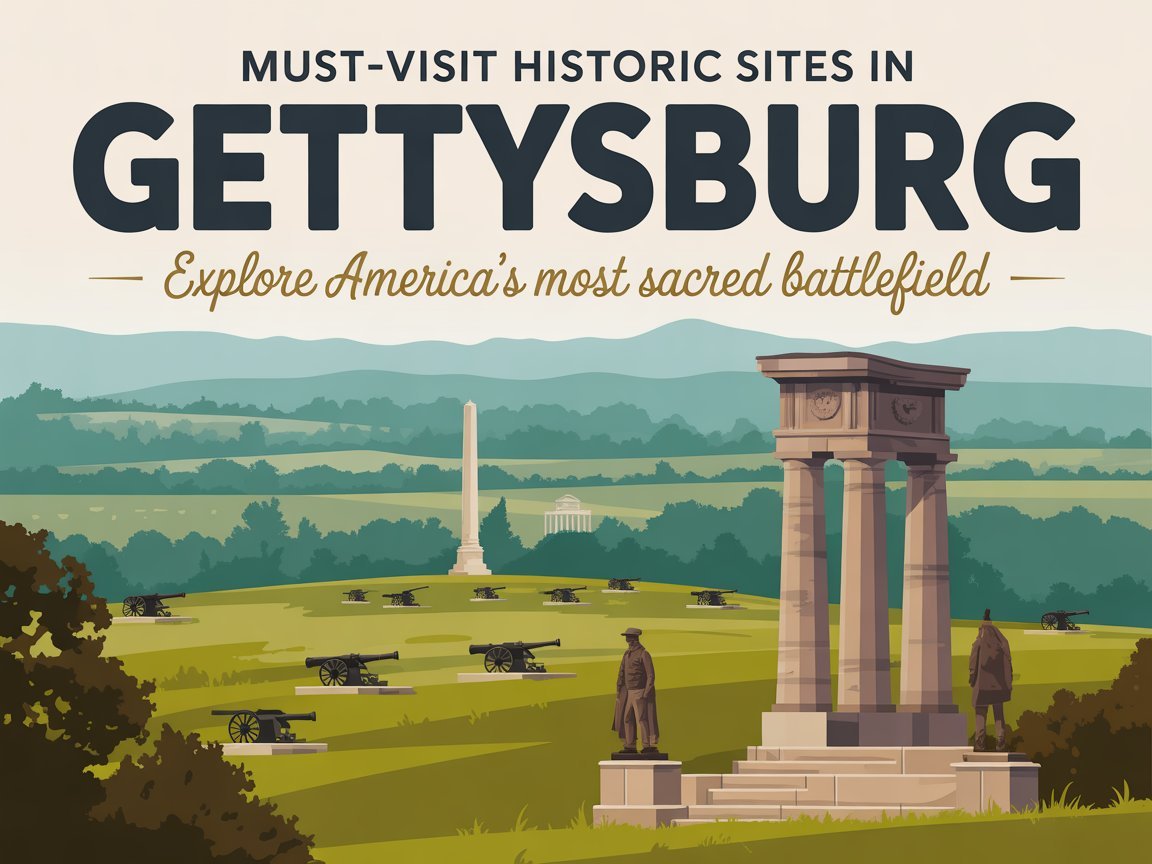
Gettysburg, Pennsylvania, is one of the most important historic destinations in the United States. Known worldwide for the Battle of Gettysburg during the American Civil War, the town is home to preserved battlefields, memorials, museums, and historic homes. Visiting these sites offers a powerful and educational journey into America’s past.
Gettysburg National Military Park Overview
The Gettysburg National Military Park preserves the land where the Battle of Gettysburg was fought from July 1–3, 1863. Spanning over 6,000 acres, the park features rolling hills, stone walls, monuments, and scenic roads. Visitors can explore the battlefield through walking trails, driving tours, and ranger-led programs that explain troop movements and key moments of the battle.
Little Round Top History & Significance
Little Round Top is one of the most famous locations in Gettysburg. This rocky hill played a critical role on the second day of the battle when Union forces successfully defended it against repeated Confederate attacks. The bravery of the 20th Maine Regiment helped secure the Union’s left flank, making Little Round Top a symbol of courage and tactical importance. Today, it offers breathtaking views and interpretive signs explaining its history.
Pickett’s Charge Battlefield Area
Pickett’s Charge marks the site of the Confederate army’s final and most dramatic assault on July 3, 1863. This open field between Seminary Ridge and Cemetery Ridge represents the turning point of the battle. Visitors can walk the same ground crossed by thousands of soldiers and view monuments that honor those who fought during this decisive moment.
Cemetery Ridge Explained
Cemetery Ridge served as the backbone of the Union defensive line. Stretching south from Gettysburg town, it provided high ground and strong defensive positions. Many monuments and cannons line the ridge today, helping visitors understand why controlling this terrain was vital to the Union victory.
Gettysburg National Cemetery
The Gettysburg National Cemetery is the final resting place of more than 3,500 Union soldiers. It is also where President Abraham Lincoln delivered the Gettysburg Address in November 1863. The cemetery is a solemn and peaceful site, encouraging reflection and remembrance while honoring those who gave their lives.
Eisenhower National Historic Site
Located adjacent to the battlefield, the Eisenhower National Historic Site was the home of President Dwight D. Eisenhower after World War II. Visitors can tour the farmhouse, see original furnishings, and learn about Eisenhower’s leadership and personal life. The site adds a broader historical perspective beyond the Civil War era.
The Gettysburg Museum & Visitor Center
The Gettysburg Museum & Visitor Center is the ideal starting point for any visit. It features interactive exhibits, artifacts, and the famous Gettysburg Cyclorama, a massive 360-degree painting depicting Pickett’s Charge. The center also offers maps, tickets, dining facilities, and a bookstore.
Self-Guided vs Guided Tours
Visitors can explore Gettysburg through:
- Self-guided tours, using maps, mobile apps, or audio guides
- Guided tours, led by licensed battlefield guides or bus tours
Self-guided tours allow flexibility, while guided tours provide expert insight, storytelling, and deeper historical context. Many visitors choose a combination of both.
Accessibility & Visitor Facilities
Gettysburg is committed to accessibility and visitor comfort. Many areas feature:
- Paved walking paths
- Accessible restrooms
- Shuttle services
- Visitor information desks
Some terrain remains uneven due to preservation efforts, but accessible options are widely available.
Photography Tips at Historic Sites
Gettysburg offers stunning photography opportunities. For the best results:
- Visit early morning or late afternoon for soft lighting
- Use wide-angle lenses for landscapes
- Capture monuments with natural scenery
- Respect restricted areas and memorial spaces
Seasonal changes also create unique photo opportunities throughout the year.
Final Thoughts
Gettysburg’s historic sites provide a powerful connection to America’s past. From famous battlefields to solemn cemeteries and presidential landmarks, each location tells a story of sacrifice, leadership, and national identity. Whether you’re a history enthusiast or a first-time visitor, Gettysburg offers an unforgettable and meaningful experience.
